
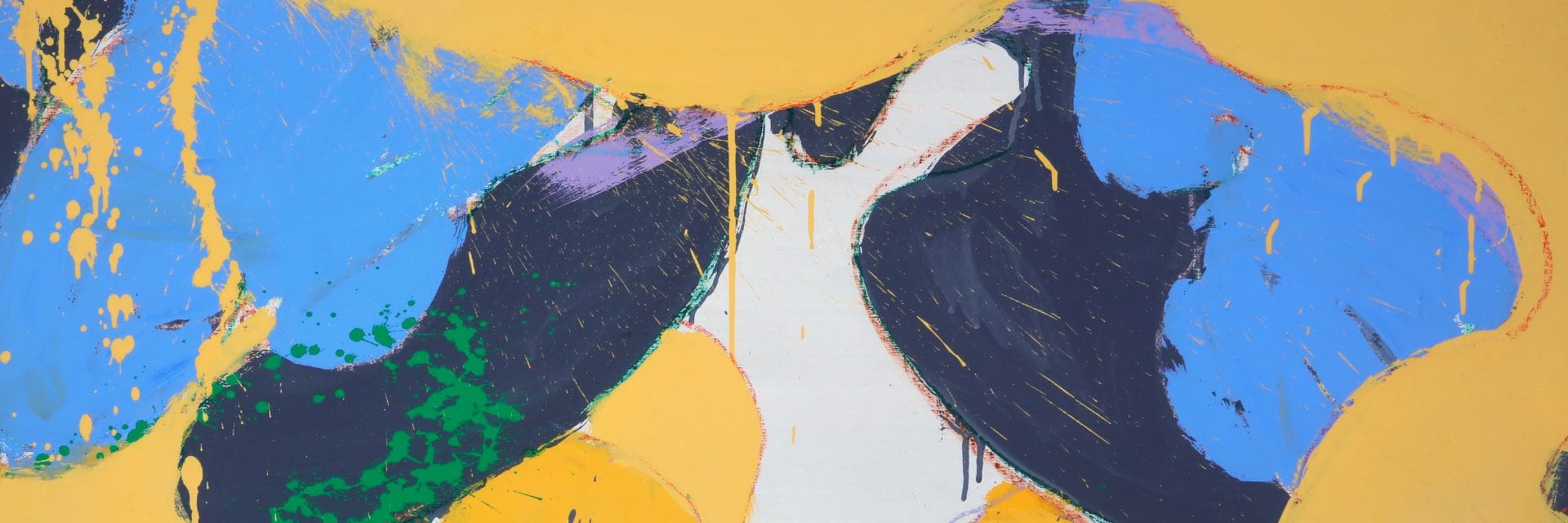
Although a highly significant approach to art, abstraction can be challenging to understand. When it first gained popularity at the turn of the twentieth century, it radically altered artistic practice by questioning the ways in which we perceive and engage with the world around us. However, as significant as it is for artists past and present, abstraction is largely misunderstood and not always self-evident, and many people wonder why it is so important. The Question of Abstraction is intended as a primer for understanding and engaging with abstract art. Largely drawn from the MFA’s permanent collection, it includes key examples that define various artistic movements championing abstraction, from the beginnings of Modernism in the early twentieth century to the present day.
Abstraction was not the invention of one singular artist but a multitude of individuals, both known and unknown, who exchanged ideas and theories. While the term is largely applied to twentieth century artistic developments that favor non-representational modes of visual expression, many artists across the world practiced abstraction long before the creation of the first consciously abstract Western painting.
Engaging with abstraction requires us to think in ways that can be paradoxically fundamental and unfamiliar. Most artists who produce abstract art do not attempt to embody an accurate depiction of reality that mirrors what we see with our eyes. Some abstract artists used their artworks to explore how basic elements such as lines, shapes, color, and spatial dynamics make up the world around us. Others used abstraction to express internal thoughts, desires, and emotions. Because these artists use abstraction to explore their unique perspectives, it is okay if you do not understand a work the first time around, or if you do not connect with everything you see. Abstract artists and their practices are inherently experimental and experiential; they only require that you take the time to see them.
As you move through this exhibition and the museum’s galleries, think about the ways in which abstraction has radically altered approaches to art making and how we interpret our lived experiences. Also, see if you can connect this style of art with both past and present examples on view in the museum today.

On view in the Miriam Acheson Gallery.
FUNDED IN PART BY THE CITY OF ST. PETERSBURG AND THE MARGARET ACHESON STUART SOCIETY


MEDIA PARTNER: WUSF: YOUR HOME FOR NPR / WSMR CLASSICAL

Featured Images:
Norman Bluhm, American, 1921–1999, Untitled (detail), 1974, Oil and pastel on canvas, Gift of Elinor Gollay from the Benjamin Gollay Collection. ©Estate of Norman Bluhm, Collection of the Museum of Fine Arts, St. Petersburg.