
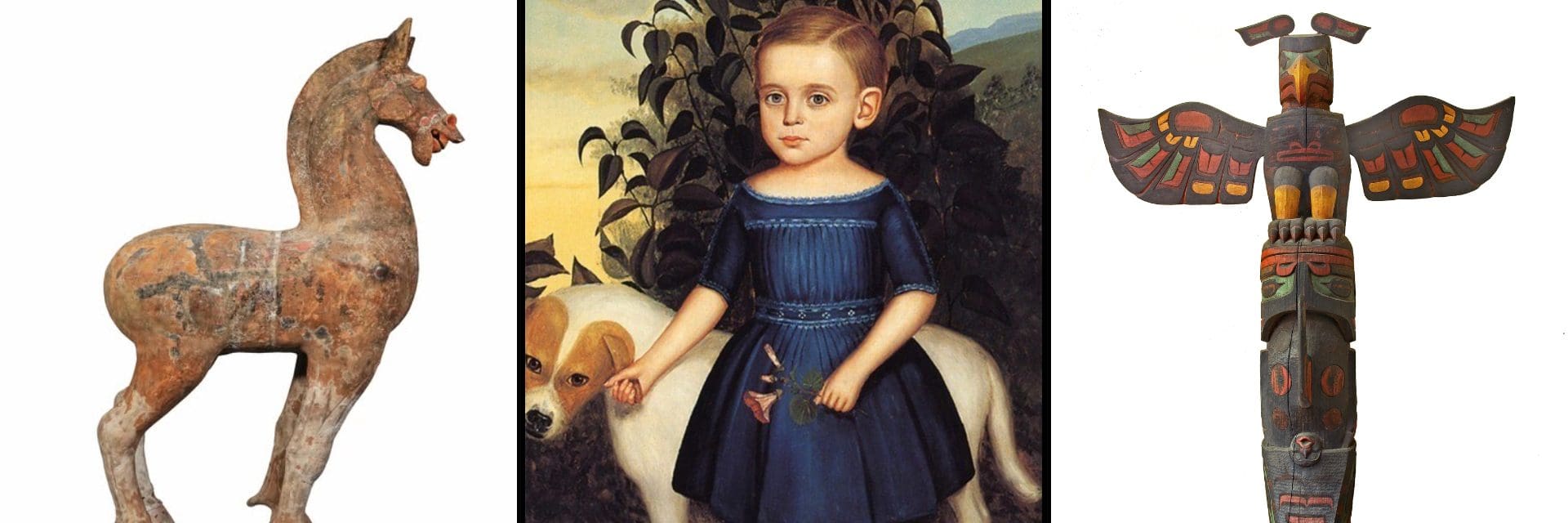
What makes us human? For centuries, we defined ourselves by our unique ability to reason, labeling our species the "rational animal." However, the philosopher Ernst Cassirer (German, 1874–1945) argued that our true defining trait is the creation of symbolic meanings. He called us animal symbolicum—the "symbol-making animal."
Cassirer was fascinated by how language, myth, and art use objects and animals to represent complex ideas. This exhibition brings together diverse artworks from around the globe to consider how we use the animal kingdom to express an extraordinary range of meanings. While some associations seem universal—the faithfulness of a dog or the power of an eagle—others reflect symbolism unique to specific traditions. Regardless of their origin, these symbols reflect our shared human experience.
This thematic look at our global holdings offers a preview of the Museum of Fine Arts, St. Petersburg’s upcoming reinstallation of the permanent collection, beginning Fall 2026.
On view in the Great Hall.
FUNDED IN PART BY THE CITY OF ST. PETERSBURG AND THE MARGARET ACHESON STUART SOCIETY


MEDIA PARTNER: WUSF: YOUR HOME FOR NPR / WSMR CLASSICAL

Featured Images:
Unknown Artist, Han Dynasty, Standing Horse, c. 100-200 CR, Terracotta with traces of pigment, Gift of Dr. David and Enid Owens
Joseph Goodhue Chandler, Portrait of Frederick Eugene Bennett, August 19, 1849 (detail), Oil on canvas, Gift of Edgar W. and Bernice Chrysler Garbisch
Calvin Hunt, Kwakwaka'wakw, First Nations, Canadian, b. 1956, Crest Pole, 1985, Cedar with polychromy